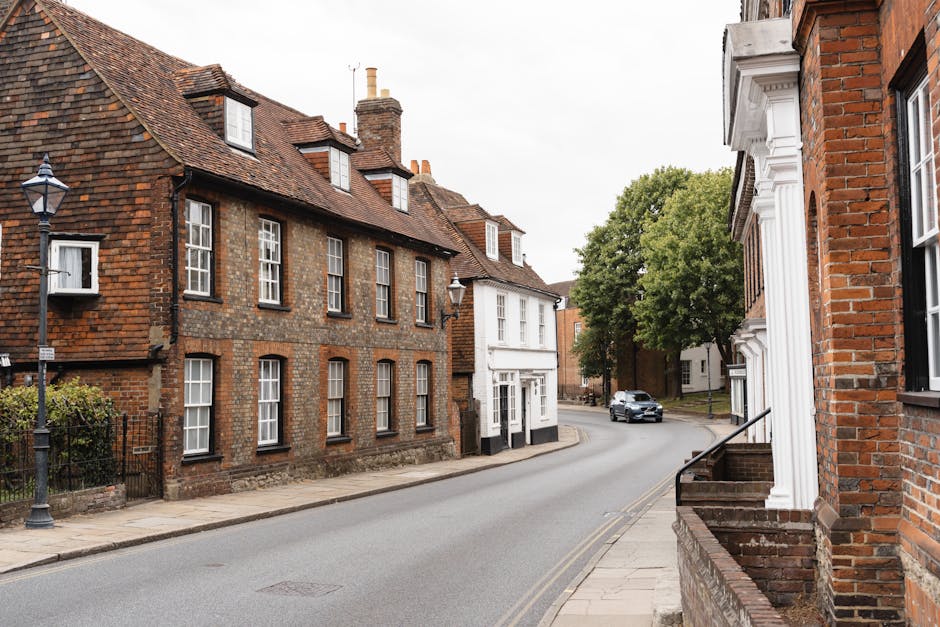
Guildford house removals guide for narrow streets GU1
If you are moving house in Guildford, especially around GU1, narrow streets can turn an ordinary removal into a slightly awkward puzzle. Tight corners, parked cars, terraced houses, no-clearance lanes, and limited loading space all change the way a move needs to be planned. This Guildford house removals guide for narrow streets GU1 is here to make that process feel a lot less stressful and a lot more manageable. You will find practical steps, local-minded advice, and a clear way to think about access, timing, packing, and vehicle choice before moving day even arrives.
Let's face it, the difference between a smooth move and a frazzled one is often in the first 15 minutes on the street. A good plan saves back-and-forth trips, avoids awkward blocking, and helps protect both your furniture and your neighbours' patience. And in a place like Guildford, that matters.
For readers comparing services while planning their move, it can also help to look at broader support such as house removals, man and van support, or home moves if you need a flexible setup for a tighter street.
Table of Contents
- Why Guildford house removals guide for narrow streets GU1 Matters
- How Guildford house removals guide for narrow streets GU1 Works
- Key Benefits and Practical Advantages
- Who This Is For and When It Makes Sense
- Step-by-Step Guidance
- Expert Tips for Better Results
- Common Mistakes to Avoid
- Tools, Resources and Recommendations
- Law, Compliance, Standards, or Best Practice
- Options, Methods, or Comparison Table
- Case Study or Real-World Example
- Practical Checklist
- Conclusion
- Frequently Asked Questions
Why Guildford house removals guide for narrow streets GU1 Matters
Narrow streets change the whole rhythm of a house move. In GU1, a van may not be able to stop directly outside your front door, and even when it can, there may be little room for doors to open, trolleys to roll, or a second vehicle to pass. That creates pressure on timing, lifting, and coordination. A removal that would be straightforward on a wider road can become slow and expensive if access is not thought through early.
This is especially important if you live in a terraced property, a converted flat, an older home with tight frontage, or a road where residents park heavily. The issue is not only the width of the street. It is the combination of street width, parked vehicles, turning room, pedestrian flow, and where the load can safely be carried from. One small blockage can ripple through the whole day.
There is also the human side of it. If your movers are trying to work while neighbours are driving in and out, or someone is waiting to leave for work, tensions rise quickly. A little planning goes a long way. Truth be told, a calm street makes for a calmer move.
Expert summary: In narrow-street moves, the real skill is not just lifting and loading. It is access planning, timing, and choosing the right vehicle and team for the road outside your property.
How Guildford house removals guide for narrow streets GU1 Works
The basic idea is simple: reduce the distance, time, and number of obstacles between your front door and the removal vehicle. In practice, that usually means thinking about the street, the property layout, and the size of the load before moving day. A sensible removal plan for narrow roads often starts with a quick access review and ends with a vehicle choice that fits the space available, not just the size of the house.
Most good moves in tight streets follow the same logic. First, identify where the van can legally and safely stop. Next, decide whether furniture can be carried directly to the vehicle or whether a shuttle approach is needed. Then work out whether the move benefits from a smaller vehicle, extra porters, or split loading. It sounds simple. It is. But you would be amazed how often this bit gets skipped.
If you are comparing options, a smaller, more agile setup often makes more sense than forcing a large lorry into a road that was never built for it. In some cases, a service like removal van support or man with a van can be a better fit than a bigger vehicle, particularly when parking and turning room are tight.
For more complex homes, or if you need packing help as well, pairing the move with packing and boxes or packing and unpacking services can take a surprising amount of pressure off moving day. One box at a time, as they say.
Key Benefits and Practical Advantages
Planning properly for a narrow street move is not just about avoiding headaches. It gives you more control over the whole day. When the access plan is clear, the crew can work faster, handle items more carefully, and avoid unnecessary lifting distances. That reduces fatigue, and tired movers make more mistakes. Simple as that.
- Less chance of delays: you are less likely to lose time finding a parking spot or reorganising the loading plan.
- Lower risk of damage: shorter carrying routes and better positioning mean fewer bumps on walls, door frames, and stairwells.
- Better neighbour relations: a tidy setup creates less obstruction and less noise for everyone else on the street.
- More accurate planning: the right vehicle and crew size can be chosen from the start.
- Less stress: when the access problem is solved early, the rest of the day feels much more doable.
There is a financial angle too. If access is poor and the team has to work around it blindly, the move can take longer than expected. That does not always mean higher cost, but it often means more effort, more time, and more risk of awkward surprises. Planning narrows the gap between expectation and reality. That matters.
Who This Is For and When It Makes Sense
This guide is for anyone moving in or out of central Guildford, particularly GU1 homes on roads that are tight, heavily parked, or awkward to turn into. It is especially relevant if you live in a terrace, a top-floor flat, a cottage-style property, or a house on a road where only one vehicle can pass at a time.
It also makes sense for:
- families with a full household move and larger furniture pieces
- flat tenants who need a quick, efficient loading and unloading plan
- students or young professionals moving with fewer items but limited access
- downsizers who need careful handling for bulky or fragile possessions
- people moving on a deadline and trying to keep the day as compact as possible
If you are moving a piano, awkward wardrobe, or heavy dining set, the access challenge becomes even more important. A specialist service such as piano removals or furniture removals may be worth considering if the item needs extra care and manoeuvring.
In our experience, this guide is also useful if you are not yet sure whether you need a full house move, a partial load, or a smaller flexible service. Narrow streets often make people rethink what they actually need, and that is no bad thing.
Step-by-Step Guidance
A clean way to handle a narrow-street removal is to break it into manageable pieces. The move becomes less mysterious when you know what happens first, second, and third. Here is a practical approach.
- Measure the access properly. Check the width of the road, the space beside parked cars, and the turning room at both ends. If you can, note where a van could stop without blocking driveways or crossings.
- Map the carrying distance. Count the distance from your front door to the vehicle position. Ten extra metres may not sound like much, but on moving day it can feel like a mile.
- Identify obstacles inside and outside. Stairs, low ceilings, narrow hallways, shared entrances, and tight corners all matter. A move can be perfectly fine on paper and still awkward at the first landing.
- Sort items by handling difficulty. Large sofas, beds, mirrors, and anything fragile should be planned first. Small boxes can fill the gaps later.
- Choose the right vehicle size. If a larger van cannot sensibly access the street, a smaller van with more trips may actually be faster and safer overall.
- Prepare parking and loading space. If the street is busy, ask yourself where the vehicle will wait, where items will queue, and whether someone needs to direct the load.
- Pack for fast lifting. Use clear labels, sturdy boxes, and consistent box sizes if possible. Odd-shaped bags and loose items slow everything down.
- Keep the first-hour essentials separate. Kettle, documents, chargers, toilet roll, snacks, and medication should not disappear into the back of the van. That mistake is oddly common.
A quick real-world example: a two-bed terrace in GU1 may not need a huge van at all, but it can absolutely benefit from careful scheduling, a smaller vehicle, and a loader who knows how to work around parked cars. The road is the job, not just the house.
Expert Tips for Better Results
Good narrow-street moves usually come down to small decisions that compound. These tips are the ones that often make the biggest difference.
1. Book for the quietest part of the day
Morning starts are often better on residential roads because traffic, school runs, and weekend parking build up later. If you can avoid the busiest window, do it. A 30-minute timing advantage can save a lot of irritation.
2. Leave furniture in "ready to move" shape
Remove legs, cushions, loose shelves, and detachable parts in advance. It makes bulky items easier to angle through narrow hallways and doorways. Also, fewer surprises. Nobody wants to discover a fixed bed frame at the last second.
3. Protect corners before the crew arrives
Door frames, skirting boards, and bannisters are often the first things to get scuffed. Corner guards or temporary protection can help, especially in older Guildford properties where walls may already be a little delicate.
4. Keep a clear path from front door to van
Sounds obvious, but it makes a difference. Shoes by the door, coat racks in the hallway, and loose bits of packing paper all slow things down. A clear path is a gift to everyone involved.
5. Use the right support level
If the move is a bit too much for one person but not enough to justify a full-scale crew, something like man with van support or broader removal services can be a good middle ground. Not every move needs to be the same. Far from it.
Another small but useful point: keep neighbours informed if your van will temporarily block a tight stretch. A quick polite conversation can prevent complaints later. It costs nothing and often smooths the day immeasurably.
Common Mistakes to Avoid
The most common errors in narrow-street house removals are usually not dramatic. They are practical oversights. Which is why they are so annoying.
- Assuming a large vehicle will fit. Measure and check rather than guessing.
- Leaving packing until the night before. That is when everything starts feeling heavier and less logical.
- Forgetting about parking pressure. A road can look empty at 7 a.m. and be packed by 9 a.m.
- Not planning for shared access. Flats, converted houses, and terraces often involve shared hallways or narrow entry points.
- Ignoring fragile items. Mirrors, glass tables, and artwork do not enjoy sudden turns in tight spaces.
- Using too many loose bags and odd boxes. Consistent packing makes the loading sequence faster and safer.
- Not checking the final exit route. Sometimes the issue is not the street itself, but the last awkward turn out of the property.
If you are moving on a deadline, the temptation is to rush through these checks. Try not to. A little patience at the start pays off later. Usually in a very obvious way.
Tools, Resources and Recommendations
You do not need fancy equipment to make a narrow-street move work, but a few practical tools help a lot. Think simple, useful, and easy to carry.
- Sturdy boxes: more uniform boxes stack better and travel more safely.
- Furniture blankets and wraps: these reduce scratches when items are moved through tight spaces.
- Labels and a marker pen: plain labels save time when everyone is trying to find the kitchen or bedroom boxes.
- Measuring tape: useful for checking doors, hallways, and furniture dimensions before moving day.
- Gloves and sensible footwear: basic, but worth it.
- Trolley or sack truck: useful where the route is smooth enough and the carrying distance makes it worthwhile.
For customers wanting a smoother packing stage, packing and boxes can help with supplies and structure, while packing and unpacking services may suit anyone short on time or energy. If you need somewhere to place items temporarily, storage can be a sensible bridge between move-out and move-in dates.
If you are clearing out old items before moving, it may also help to arrange furniture pick up or broader furniture removals so the main move is lighter and simpler. Less clutter, less stress. Nice and plain.
Law, Compliance, Standards, or Best Practice
For a house removal on narrow streets, the most important compliance questions usually relate to safe loading, parking, and road use. You do not need to become a legal expert, but you do need to move responsibly and in line with local rules and common UK best practice.
In practical terms, that means making sure vehicles are parked legally, not obstructing emergency access, driveways, or pedestrian crossings, and taking care around neighbours, road users, and property edges. If a move needs extra stopping time or more formal access arrangements, it is sensible to plan that in advance rather than improvising on the day.
Health and safety matters too. Safe lifting, sensible team size, and proper handling of awkward items are not optional extras. They are part of a professional move. You can review general standards and service expectations through the site's health and safety policy and insurance and safety information, which are useful reference points when choosing a mover.
There is also the matter of terms, payment, and trust. It is wise to understand the provider's terms and conditions and payment and security approach before booking. Not glamorous, perhaps, but absolutely worth doing.
For businesses or mixed-use properties, the same care applies, though the scheduling and access challenges can be even tighter. In those cases, commercial moves or office removals may offer a better framework.
Options, Methods, or Comparison Table
Not every narrow-street move should be handled the same way. Here is a simple comparison of common approaches.
| Method | Best for | Strengths | Trade-offs |
|---|---|---|---|
| Large removal vehicle | Wider roads and full-house moves | Can take more at once, fewer trips | May be difficult to park or turn in narrow streets |
| Smaller removal van | Tight access, terraced streets, mixed loads | More agile, easier to position | May require more trips |
| Man and van setup | Smaller homes, flats, partial moves | Flexible and often quicker to organise | Not always ideal for very large households |
| Split load with storage | Moves with date gaps or limited access | Reduces pressure on moving day | Needs extra planning and temporary holding space |
If your street is particularly awkward, a smaller vehicle can honestly be the smarter move. Bigger is not automatically better. In narrow roads, easier handling often wins.
Case Study or Real-World Example
Picture a family moving out of a two-up, two-down house in GU1. The road is narrow, parked on both sides, and cars tend to come and go all morning. The property itself is fine, but the access is the issue. A large vehicle would struggle to stop safely, and a full-size loading plan would probably create delays.
In a case like this, the move is usually made better by breaking it into stages. First, the team identifies the nearest sensible stopping point. Then the larger furniture is prepped for quick removal, with boxes stacked by room and a clear path from the door. Fragile items are separated. The van is loaded in a sequence that matches the carrying route, not just the room list. That small detail matters more than people expect.
The result? Less waiting, fewer awkward manoeuvres, and much less "where on earth do we put this?" energy. A move like that still takes effort, of course, but it feels controlled instead of chaotic. And when the final box is in, that first quiet cup of tea tastes very good indeed.
Practical Checklist
Use this checklist the day before and again on the morning of the move.
- Measure the street access and note likely parking positions
- Check whether a van can stop legally and safely near your property
- Confirm the carrying distance from door to vehicle
- Protect floors, bannisters, and vulnerable corners
- Label boxes by room and priority
- Disassemble bulky furniture where possible
- Keep essential items in a separate bag or box
- Tell neighbours if access will be briefly restricted
- Keep pets and children safely out of the loading route
- Have keys, paperwork, and phone chargers to hand
- Review booking details, timing, and payment arrangements
- Check whether you need same day removals or a more flexible schedule
A lot of moving stress comes from tiny loose ends. This list is designed to catch them before they catch you.
Conclusion
Narrow streets in GU1 do not have to make house removals difficult. They just require a more thoughtful plan. Once you understand the access, choose the right vehicle, pack in a way that supports fast loading, and keep the route clear, the whole job becomes much more manageable.
The main lesson is simple: plan for the street you actually have, not the one you wish you had. That mindset alone prevents a lot of trouble. If you are moving soon, take a few minutes now to think through the route, the vehicle, and the load order. Small decisions. Big difference.
Get a free quote today and see how much you can save.
And if you want a move that feels calmer from the outset, choose the setup that fits your street, your timing, and your home. That kind of steadiness matters more than people think.
Frequently Asked Questions
How do you move house on a narrow street in Guildford GU1?
You start by checking where the vehicle can stop safely, how far items need to be carried, and whether a smaller van would fit better than a larger lorry. After that, packing and timing do most of the heavy lifting, so to speak.
What size van is best for narrow streets?
Usually a smaller, more manoeuvrable vehicle works best. The right choice depends on the amount you are moving and how difficult the street access is. A smaller van with more efficient loading can often outperform a bigger vehicle that struggles to park.
Do I need parking suspension or special permission for my move?
That depends on the street and the local parking situation. Some moves can be managed with careful parking and timing, while others need extra arrangements. It is sensible to check early rather than hope for the best on the day.
What if the removal van cannot park outside my house?
Then the move may need a short carry route from the nearest safe stopping point. This is common on narrow roads and does not necessarily create a problem, but it should be planned into the job from the start.
Is a man and van service suitable for GU1 narrow streets?
Often, yes. A flexible service such as man with a van can suit smaller or more awkward moves where access is limited and a large vehicle would be less practical.
How far in advance should I book a house removal in Guildford?
As early as you can, especially if the access is tricky or you are moving at a busy time of year. Early booking gives you more choice over vehicle size, timing, and support level.
What should I pack first for a narrow-street move?
Start with items you do not need daily, then work towards the essentials. Heavy or awkward items should be planned early so they can be loaded in the right order and moved safely through narrow spaces.
Can I combine removals with packing help?
Yes, and that can be a smart option if the move is time-sensitive. Services like packing and unpacking services can reduce pressure and help keep the day moving smoothly.
What is the biggest mistake people make on narrow streets?
Assuming the road will be easy enough on the day. It sounds obvious, but many problems begin with not measuring, not planning parking, or underestimating how long carrying distances will take.
How can I protect my furniture during a tight access move?
Use good packing materials, blankets, and proper wrapping for fragile or polished items. Keep pathways clear, remove loose parts, and make sure items are ready to move rather than half-prepared.
Are narrow-street removals more expensive?
Not always. Costs depend on the amount of work, the vehicle required, and how long the move takes. Narrow access can increase the complexity, but careful planning often keeps the job efficient.
What if I also need storage between homes?
That can be a very sensible solution if dates do not line up or if access is too tight for a full same-day unload. Storage can buy you breathing room and reduce pressure.
Can I move large furniture down a narrow Guildford street safely?
Yes, provided the item is properly prepared, the route is clear, and the carrying plan matches the space available. In some cases, specialist handling is the safest choice, especially for heavy or delicate pieces.